Agentic Engineering Boot Camp 2026 · 2nd Cohort
The Agentic Engineering Boot Camp
Now that Codex and Claude Code can finish almost any coding task, this era is producing an entirely new engineering role — the agentic engineer.
— restated from Andrej Karpathy's "Software 3.0" talk
What frontier labs and AI companies are hiring for right now
Over the past year, agent engineering has become one of the fastest-growing engineering tracks in the industry. Open the careers page of almost any frontier AI company and you will find these roles:
- Design and implement the full agent loop: planning, tool calls, multi-step execution and self-correction
- Build evals and observability for agents, and drive task failure rates down over time
- Strong context engineering and tool-interface design; experience taking LLM applications to production
- Work deep in the transformer inference path: KV cache, continuous batching, speculative decoding
- Stand up high-throughput, low-latency model serving with vLLM / TensorRT-LLM and similar
- Comfortable with quantization and memory optimization; own latency and cost against an SLA
- Build perception and control nodes in ROS2, wiring vision → 3D localization → motion planning
- Put VLMs/LLMs into robot task planning so natural-language instructions become executable actions
- Familiar with the sim-to-real debugging and validation loop
- Integrate agent capabilities into a customer's existing systems (ERP / CRM / internal tools)
- Design permissions, audit trails and human approval gates so agents can be trusted under enterprise constraints
- Own delivery end to end: scoping, integration, launch and operations
Public compensation data puts Bay Area total comp for these roles commonly in the $200K–$500K+ range. What they share is that none of them stop at calling a model API — they ask you to build, evaluate and operate a complete agent system. That is exactly what these two phases and six projects train.
- An engineer or researcher who wants to build agent systems that solve real internal, customer-facing or research problems
- Job-hunting, and want to land a role in LLM agent systems or embodied agents within six months
- Learning to build or serve LLM/VLM agents in production
- Ready to move your own development workflow into the agent era — out of hand-configured servers and artisanal shell work, into Vercel / Daytona / Langfuse / Supabase / Cloudflare / Render / Stripe MCP / CLI-anything
- Trying to reach the genuine frontier of agent engineering rather than the tutorial layer
- Only want to learn how to use Claude Code / Codex, with no intent to build agents of your own
- Want to understand LLM internals — an agent is LLM + harness, so the LLM itself is a prerequisite here, not the subject (you can prepare with LLM from Scratch and LLM Agents in Agentist Academy)
- Only want to use AI tools (image generation, no-code agent builders) rather than build agent systems
- Agentist Academy: structured self-study on frontier agent work — prepare before the cohort, top up during it
- Parallight Agent Runtime: hosted sandbox evaluation, data and result analysis for the agents you build
- Loop engineering and graph engineering
- Self-evolving agents and recursive evolving agent systems
- Embodied agents
- Computer-use agents
- Multi-modal agents — theory and practice
- Building LLM serving infrastructure for enterprise support — a systems-level project
- An agent upgrade of an existing enterprise ERP
- A multi-modal, embodied UR5 pick-and-place robot
Led by Marvin Gao. A live lecture each week plus 6–8 hours of lab work; within four weeks, three genuinely useful personal agent projects land alongside the curriculum.
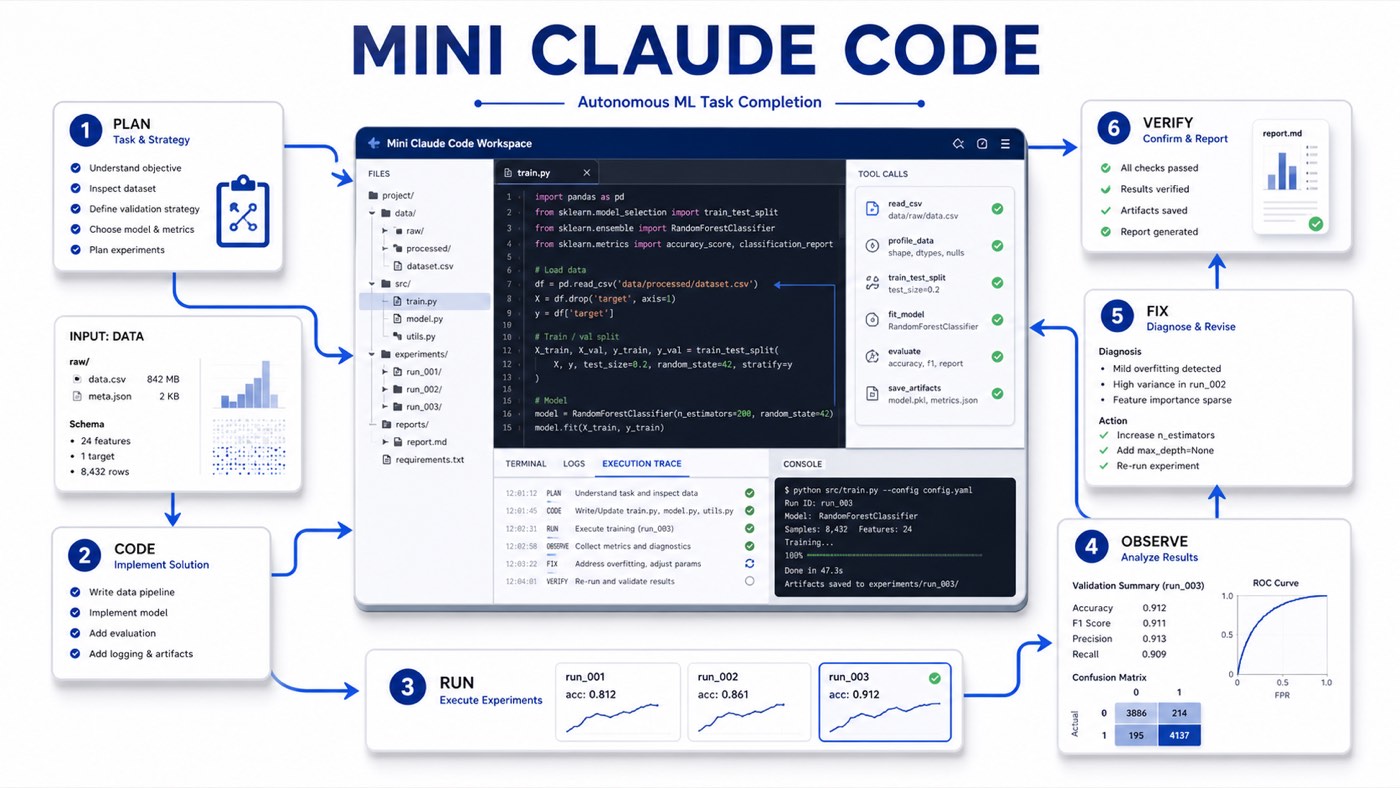
- Plan–Act–Observe–Verify: what each step of the ReAct loop actually does at the token level
- The full life of a tool call: schema design, argument validation, result injection — the round trip between model and runtime
- MCP's server / client / transport architecture, and how it differs from function calling
- Where the boundaries actually fall between tools, skills and sub-agents
- Sandboxing and execution permissions: the engineering boundary that lets an agent do work without doing damage
- How system prompt, conversation history and tool results get laid out — and the "context rot" problem
- The three-layer architecture of working / episodic / long-term memory, and when each is read and written
- The full RAG path: embeddings, vector retrieval, reranking, and how to inject results without poisoning the reasoning
- Context compaction and summarization: what to keep, what to drop, what to push out to the filesystem
- Seen from the KV cache: why prompt-prefix stability directly determines inference cost
- Claude Code: the most thoroughly validated agent harness in the world right now
- Architecture teardown: main loop, tool set design, sub-agent dispatch, permission model, TODO management
- System prompt engineering: why Claude Code's system prompt reads the way it does — the reason each section exists
- Why the same model can be 10× more capable under a different harness
- Hands-on extension: injecting your own tools, skills and workflows on top of Claude Code
- OpenClaw architecture: gateway, session management, multi-channel entry (WhatsApp / Telegram / iMessage), scheduled and self-initiated triggers
- How Hermes works: the state machine of a personal assistant agent, its skill system, local tool orchestration and self-improvement loop
- Resident agents vs one-shot agents: process model, memory persistence, event-driven execution
- Privacy and permission design: how much it gets to see, and who decides
- More than half of enterprise software has no API — computer use is the skeleton key to every legacy system, and one of the fastest-growing agent directions of 2026
- The full path: screenshot → visual grounding → coordinates → mouse and keyboard actions → verification
- GUI grounding models: why "understanding an interface" is far harder than "saying the right answer"
- The OSWorld benchmark: how the field measures what computer-use agents can really do
- Hybrid execution: API-first with computer use as fallback — the standard enterprise play
- Multi-modal input fusion: text, screenshots and files entering one reasoning loop
- Reaching for multiple agents unnecessarily was one of the most expensive engineering mistakes of 2025 — this week settles which problems actually earn it
- The classic topologies: orchestrator–worker, hierarchical, debate, pipeline — and the task shapes each one suits
- Inter-agent communication: message passing, shared blackboard, A2A, and the information loss that context isolation costs you
- Parallelism gains vs token cost: the cost model of a multi-agent system, and how to keep it from running away
- Failure modes: diffusion of responsibility, forwarding loops, consensus collapse — and what to do about each
- The most important new direction in agents worldwide from April to July 2026 — agents that run all night, or all week, without someone watching
- Getting out of hand-written prompts: agents that generate and manage their own prompts to steer their own execution
- Loop engineering: state persistence, resumption, timeout / budget / retry policy, and where the human-in-the-loop approval points belong
- Graph engineering: compiling a complex task into an execution DAG, with node-level retry and partial rollback
- Safety valves for unattended runs: budget breakers, action allowlists, exception reporting — the preconditions for letting an agent run overnight alone
- The most closely watched new technique of 2026: not a human improving the agent, but the agent improving itself from its own traces
- The full loop: trace → extract failure modes → generate a fix → validate in a sandbox → compare old against new
- Recursive evolving agent systems: when the improvement mechanism itself enters the evolution loop
- The boundary and safety of self-modification: which changes an agent may ship alone, and which must return to a human
- Paid off in Phase 2: this machinery gets fully implemented in Project 6's airline-ticketing scenario (trace → failure mode → fix → sandbox test → approval → ship)
- An agent evaluation framework across seven dimensions: task success rate, tool-call accuracy, hallucination rate, policy compliance, latency and cost
- Trace analysis and failure taxonomy: classify and quantify every failure, then turn it automatically into a regression test
- Using LLM-as-judge correctly, and the traps (position bias, self-preference, score drift)
- Agent security: prompt-injection defence, least-privilege tools, approval gates on high-risk actions, audit trails
- Sandbox evaluation → staged rollout → monitored rollback: a new version ships only if it evaluates better
- Application deployment: Vercel / Cloudflare Workers / Modal (against the AWS 7-step configuration chain)
- Self-hosted inference: vLLM and SGLang in depth, plus a five-engine selection map
- Agentic DevOps (the 2026 pattern): canary, blue-green and shadow mode, all agent-driven
- LLMOps observability: Langfuse in depth, plus a six-way comparison (LangSmith / Helicone / Phoenix / Braintrust / Datadog)
- LiteLLM as a token and proxy governance layer: multi-model fallback, per-tenant quota, cost optimization
- A framework for choosing your compute ecosystem: NVIDIA (CUDA / TensorRT / NIM), Amazon (Bedrock / AgentCore), Anthropic (MCP / Skills / Claude Code) plus the TPU path; and a comparison of the GPU compute market
Mentor-led, 15 days of iteration per project, every one adapted from real company work and fit to put on a résumé. If you will take a heavier workload, the three projects can run in parallel and start earlier (as early as week 2, finishing week 9) — you decide once the cohort starts. Each weekend: 3 hours of live lecture plus 3 hours of TA-led lab, to clear environment setup, permissions and data out of your way.
LLM serving infrastructure for enterprise support
LLM Serving Infrastructure for Enterprise Support
Adapted from a project at a well-known US AI lab
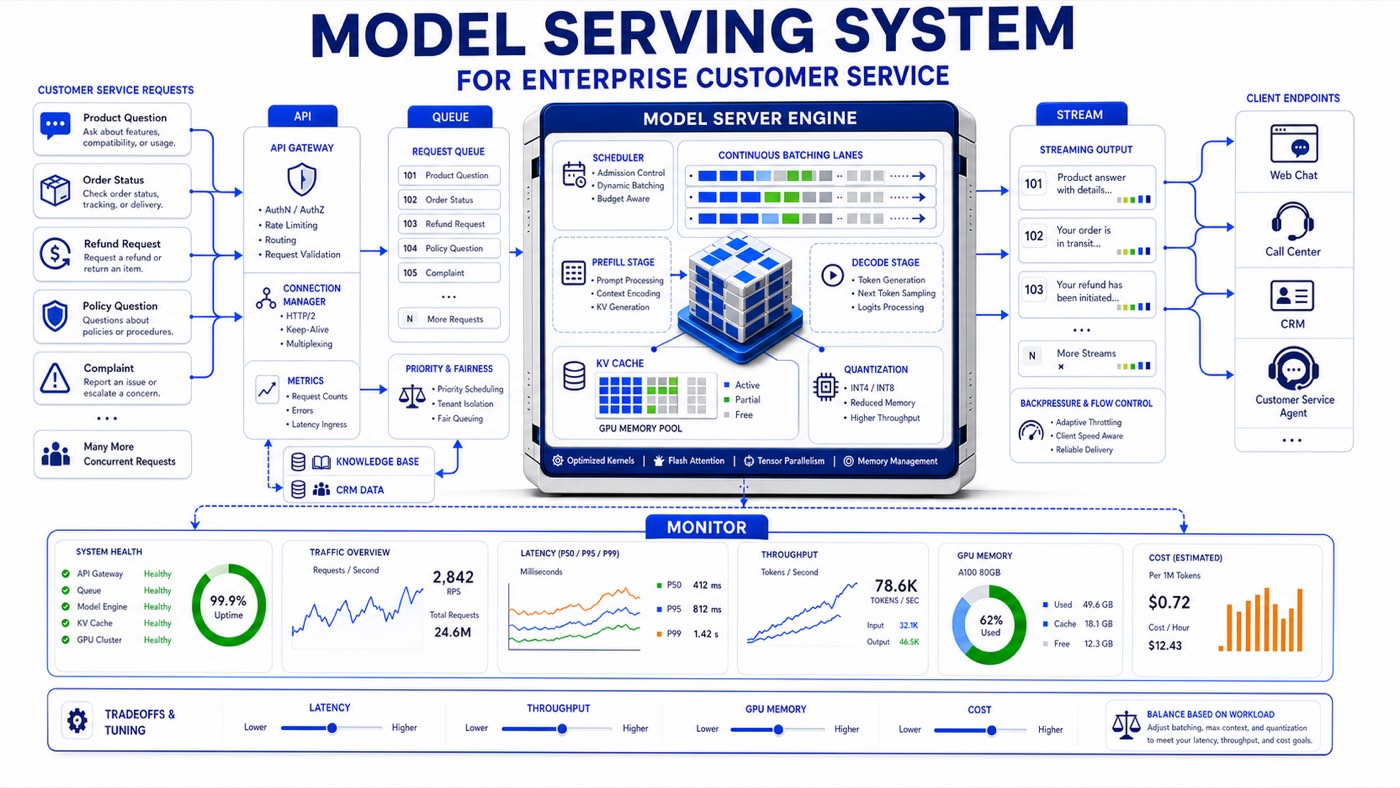
- Prefill and decode: "reading your question" and "emitting the next token" are two completely different compute profiles
- How streaming really works: SSE / WebSocket and the server structure behind token-by-token delivery
- The shared vocabulary of serving performance: TTFT, TPOT, p50 / p95 / p99 and throughput — and why the average is the least useful number you have
- What the KV cache actually caches: the quantitative trade between compute saved and memory spent
- Write a toy server by hand: request intake → queue → inference → streamed response, with no serving framework underneath
- Static vs continuous batching: the dividing line of high-throughput serving in 2026
- Request queue scheduling: priority, fairness, and the head-of-line blocking you get from mixing long and short requests
- FP16 / INT8 / INT4 quantization in practice: measured speedup against measured quality loss
- Production frameworks: deploying and tuning vLLM / SGLang, mapping your toy server's principles onto a real engine
- Rate limiting, multi-tenant isolation and backpressure: how one tenant saturating traffic fails to take everyone down
- Wiring in enterprise knowledge bases and CRM data: the support agent's retrieval path and where it couples to the serving layer
- Load testing, fault injection and capacity planning: producing an SLO you could actually promise a customer
- A streaming LLM server plus the API layer an enterprise support agent runs against
- A KV-cache and batching comparison study, and before/after numbers on quantization quality and speed
- A latency / throughput / GPU-memory / cost-per-task dashboard, and one explicit service SLO
- The LLM server source — résumé-ready evidence that you understand inference serving, not just how to call an API
A ROS2 and multi-modal agent control system for the UR5 robot
Embodied Agent · Vision → Motion · UR5
Adapted from real work at a leading US robotics company
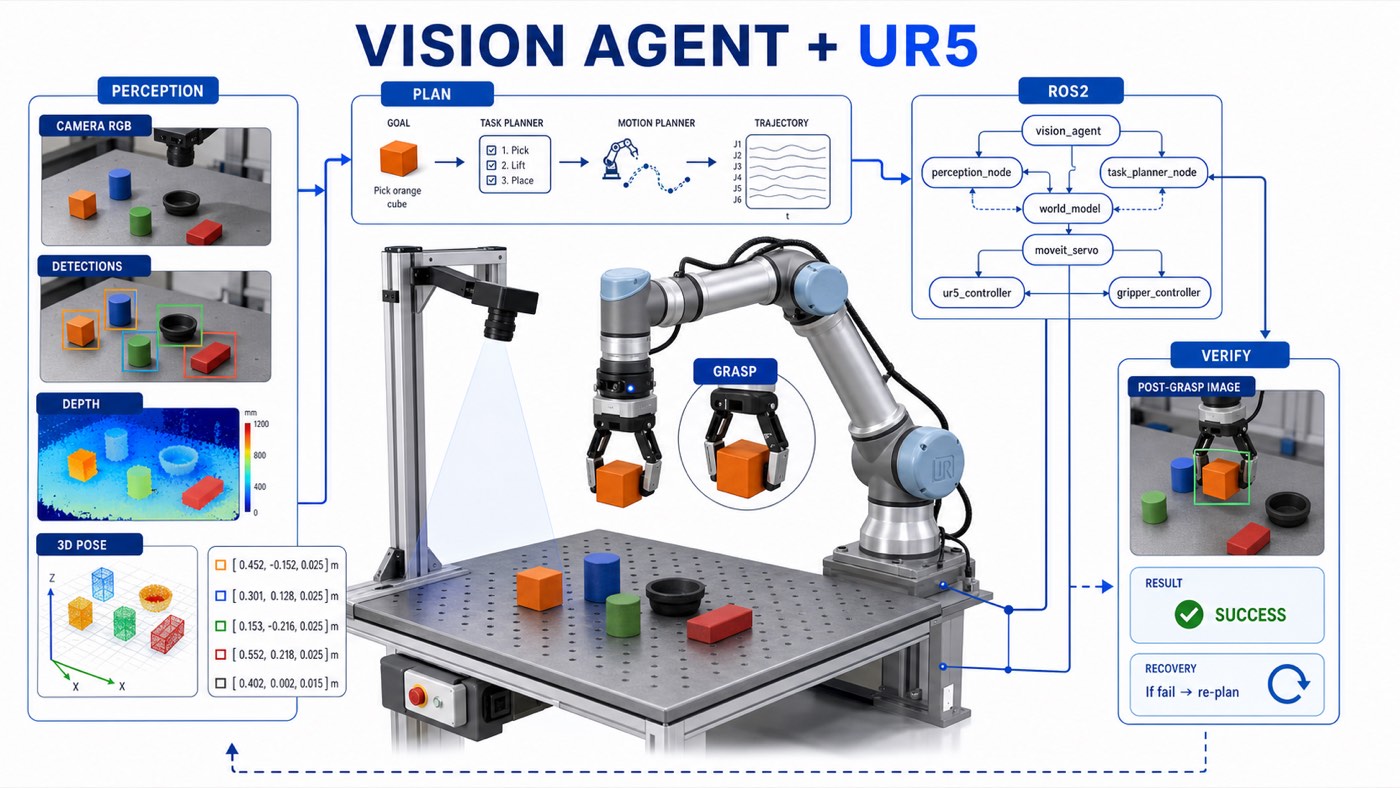
- ROS2 fundamentals: node / topic / service / action, and simulated control of the UR5 and its gripper
- Robot dynamics and frames: camera calibration and TF2 transforms — going from "seeing it" to "knowing where it is"
- RGB and depth input: a perception pipeline that survives visual noise
- The embodied AI landscape: why embodiment is the final exam for multi-modal agents
- VLM-driven object detection and target selection: from 2D detection to 3D pose estimation
- Task planning → motion planning: MoveIt2 path planning, grasp pose generation, collision checking
- Execution feedback and visual verification: confirming after each action that the world actually changed as intended
- Failure classification and replanning: recovery from missed grasps, collisions and occlusion; robot safety boundaries
- Using harness engineering and skills to raise robot task success rates
- Getting the model onto real hardware
- ROS bag execution replays
- A grasp success-rate and failure-classification report
- A project demo video you can put on a résumé
Agentifying an airline ticketing system and an enterprise ERP
Task Agent · Self-Evolving · Enterprise ERP
Adapted from an airline-ticketing agent project at a US technology company
- Dialogue state and formal task state: multi-turn clarification, intent tracking, recovery after interruption
- Policy grounding and RAG verification: every answer standing on real policy, real knowledge base and real business data
- Joint reasoning over structured and unstructured data; where business rules must be hard-coded rather than inferred
- The self-evolving loop, fully implemented: trace → failure mode → proposed fix → sandbox test → old-vs-new comparison → approval → ship
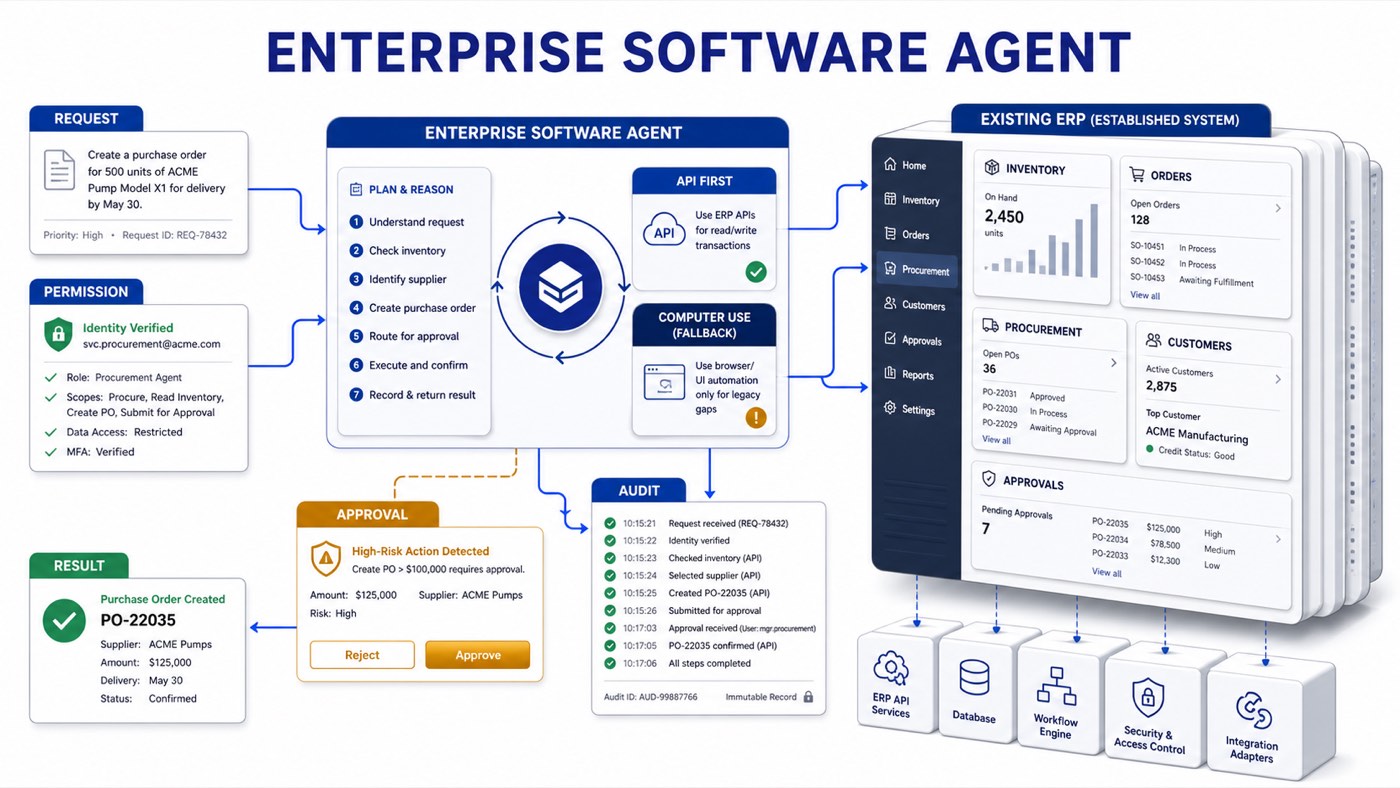
- Taking over an existing system: inventory of API / database / UI capability, and business capability mapping
- Wrapping ERP APIs as agent tools, an API-first strategy, with computer use covering the legacy gaps
- RBAC least privilege, approval gates on high-risk actions, idempotency and double-submit protection, transactions and compensating actions
- End-to-end audit trails, and permission attack testing
- The exercise: have the agent find products likely to stock out in the next two weeks while demand is rising, generate a purchase recommendation, auto-create the PO when the amount is within its authority, and escalate to a manager when it is not — leaving a complete audit record either way
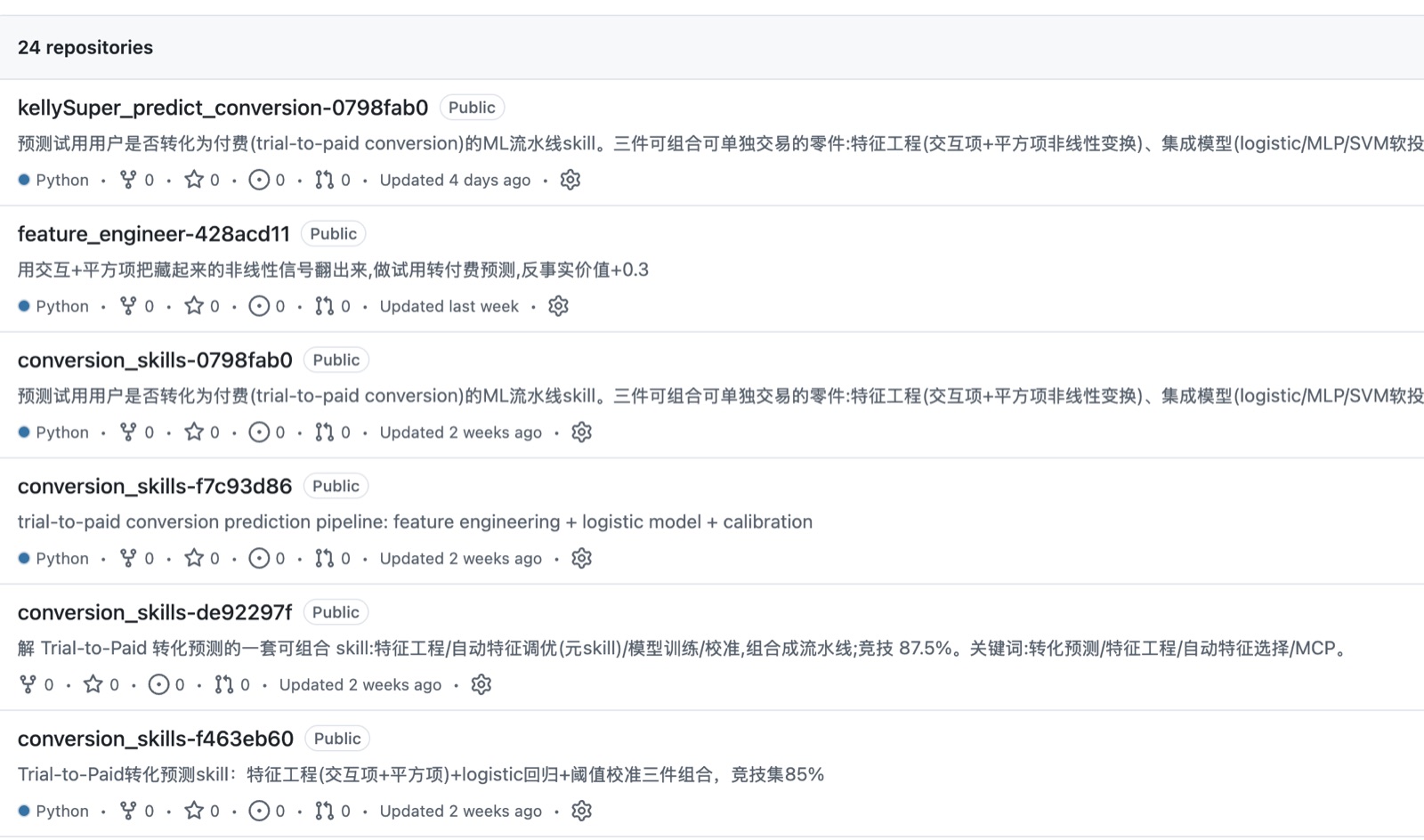
- A complete, continuously deployed agent system that real users can reach and use — straight into your own portfolio
This is not just a series of live lectures.
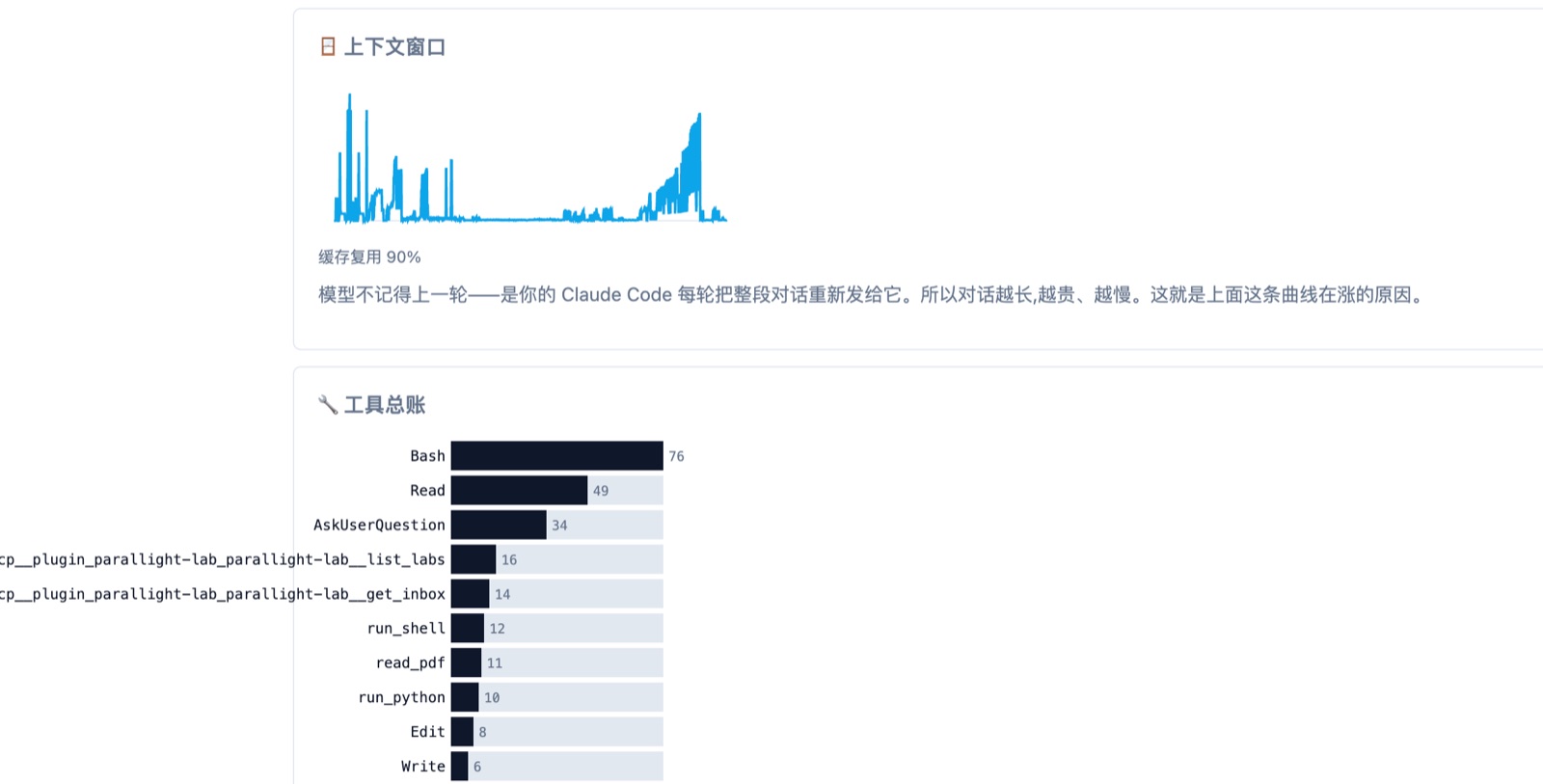
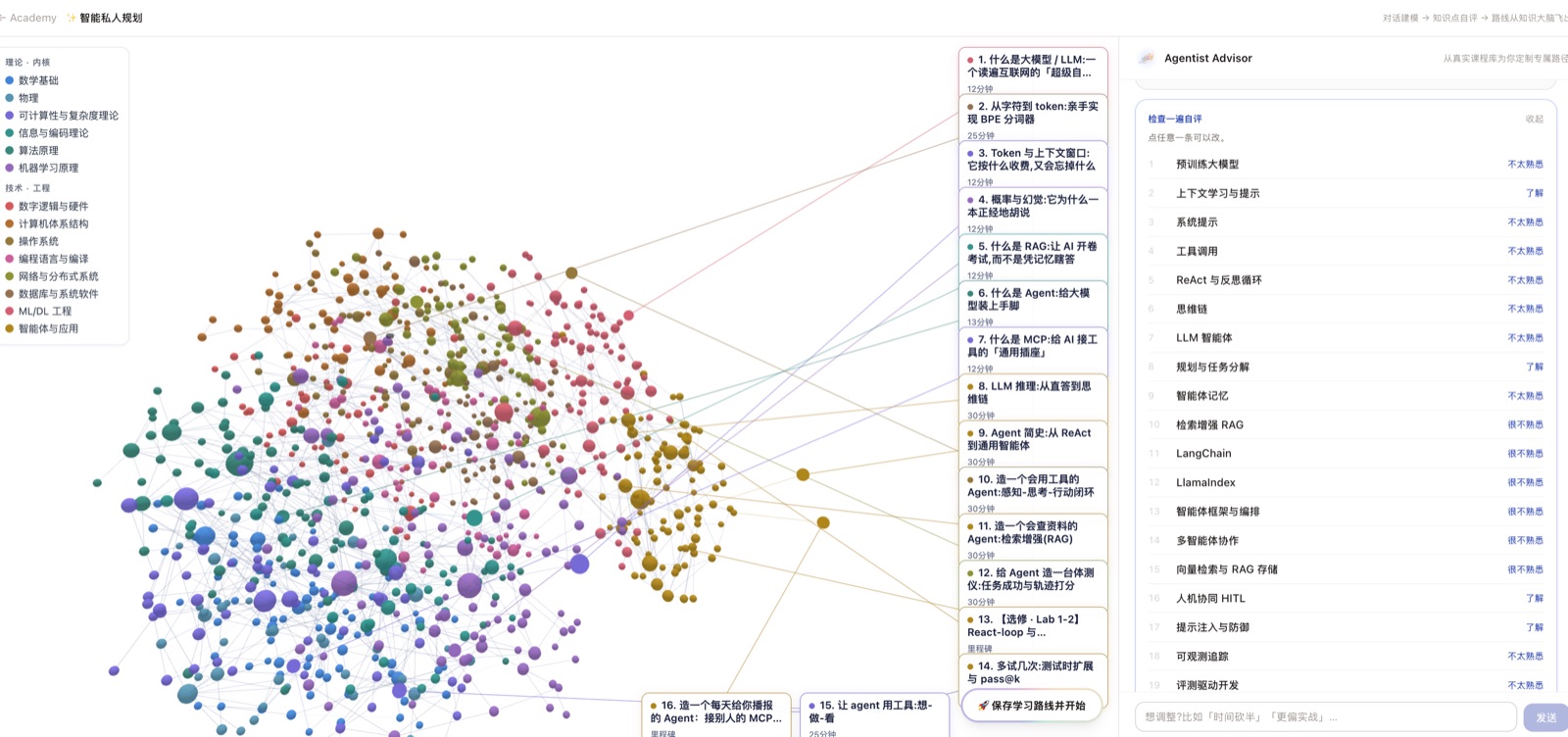
- An ML training agent that tunes hyperparameters and drives GPUs on its own
- A productivity assistant that manages OBS recording and edits video automatically
- An automated stock trading agent (can connect to live Robinhood trading)
- LLM serving infrastructure for enterprise support — adapted from a project at a well-known US AI lab
- A ROS2 and multi-modal agent control system for the UR5 robot — adapted from real work at a leading US robotics company
- An agent upgrade and automation of an existing enterprise ERP — adapted from an airline-ticketing agent project at a US technology company

Marvin Gao
Founder & CEO of Parallight · teaches Phase 1 and Project 4 · weekly 1-1s
Studied computer science at Zhejiang University and Johns Hopkins University, and did reinforcement learning research at Peking University. Formerly a senior AI scientist at IBM, with work published in JMLR, IEEE TPAMI, ICRA and AAAI; creator of MARLlib, a widely used multi-agent reinforcement learning framework. The company he founded, KeploreAI, focuses on automated enterprise agent construction and most recently closed a pre-seed round at a $27M valuation. Over 2,000 engineers across 13 countries on four continents have trained in his and Parallight's programs.
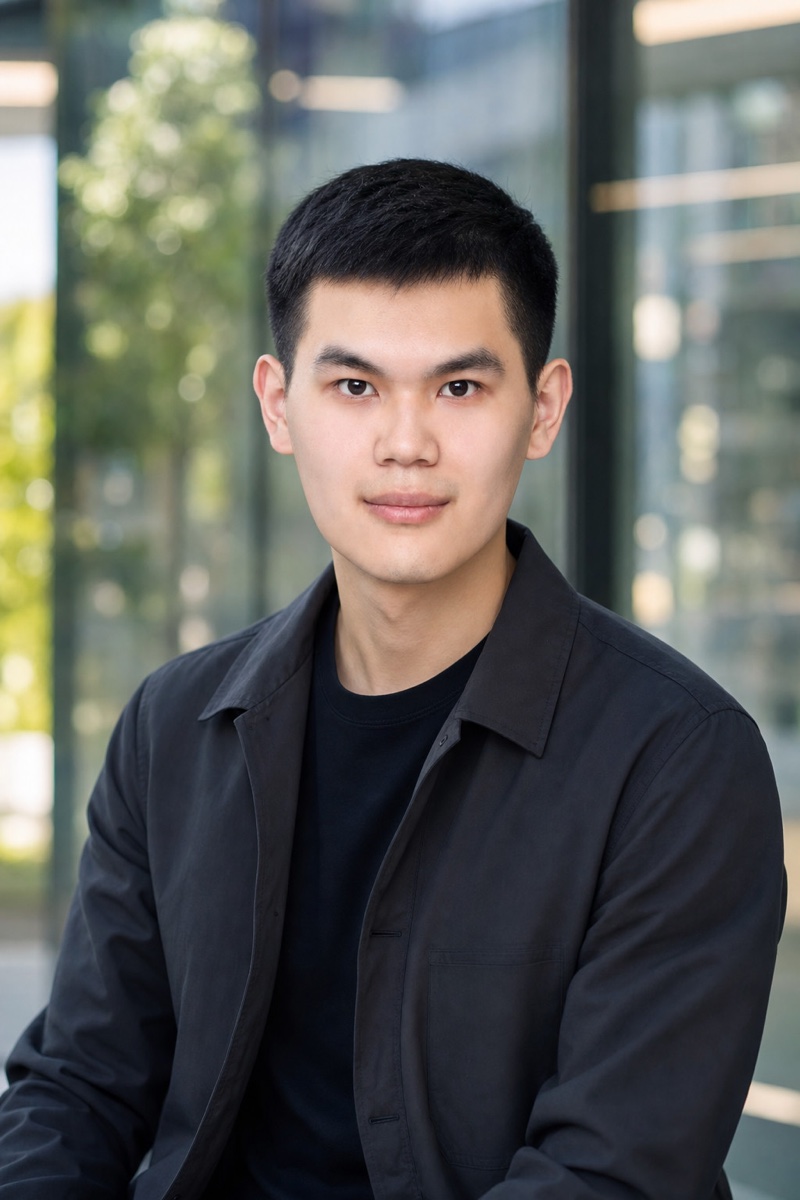
Howard Cao
Leads Project 5 (UR5 robot) and Project 6 (ticketing + ERP)
Studied computer science at the University of Houston and Johns Hopkins University, worked on robotics vision and AI engineering research at Amazon Robotics, and is now chief AI architect at KeploreAI. He has led work on robotic item picking, vision-based physical inspection, automotive intelligent automation and visual inspection agents, with a deep research background in computer vision and video understanding.
- Live sessions Saturday or Sunday, 3 hours each; roughly 6–8 hours of lab work per week
- After payment: Agentist Advisor builds your personalized pre-course prep (also emailed to you) plus a $50 learning credit — start preparing immediately
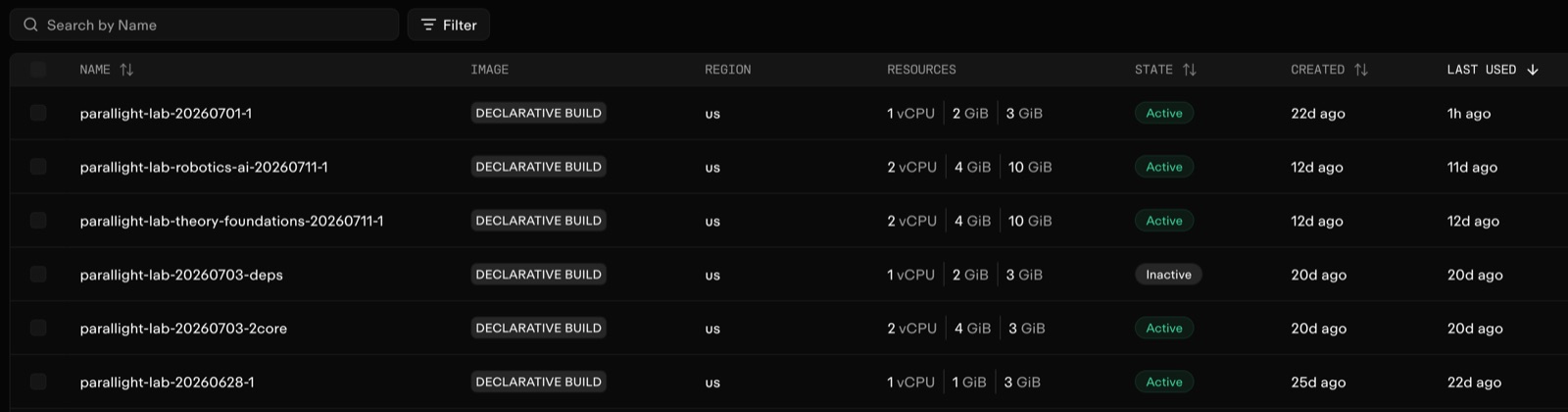
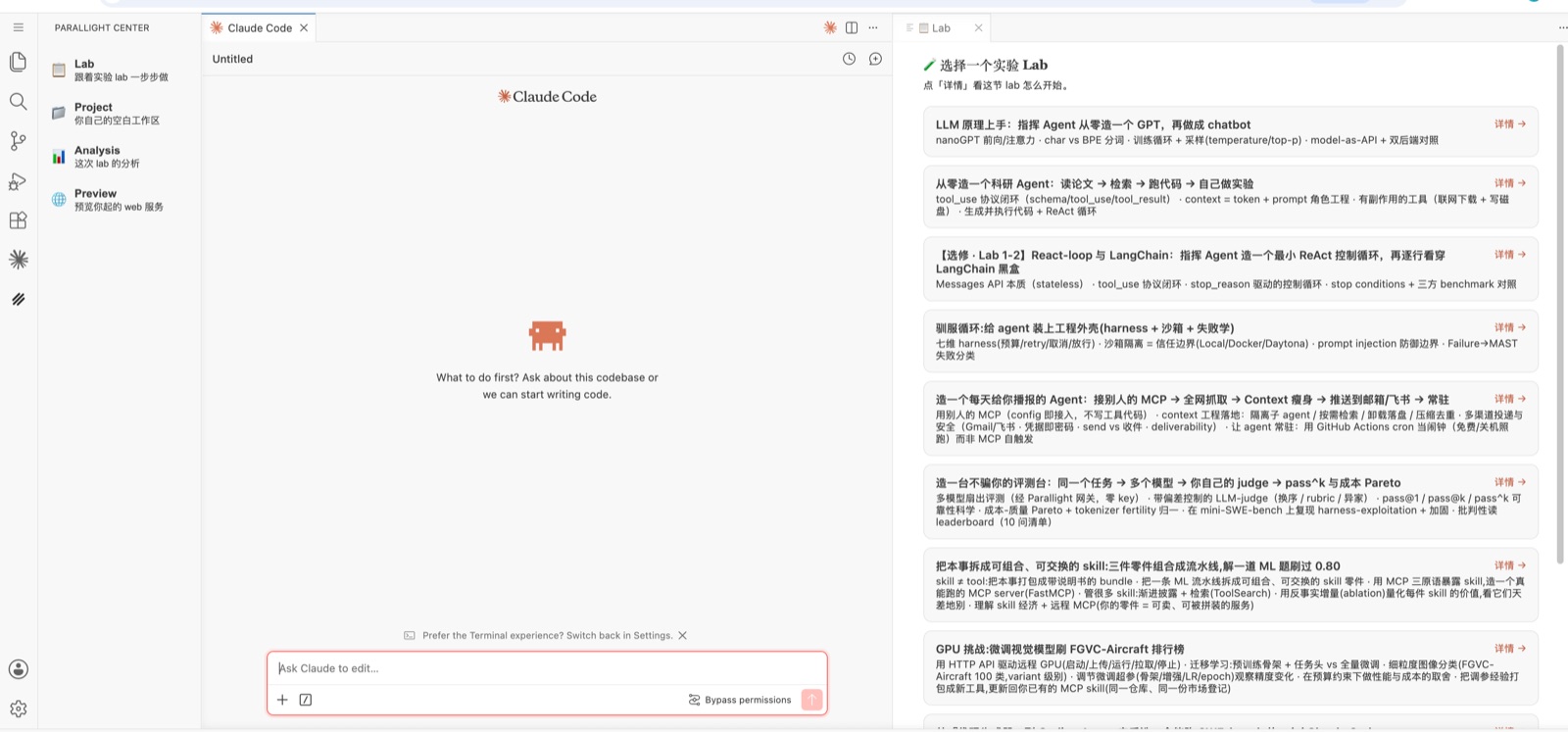
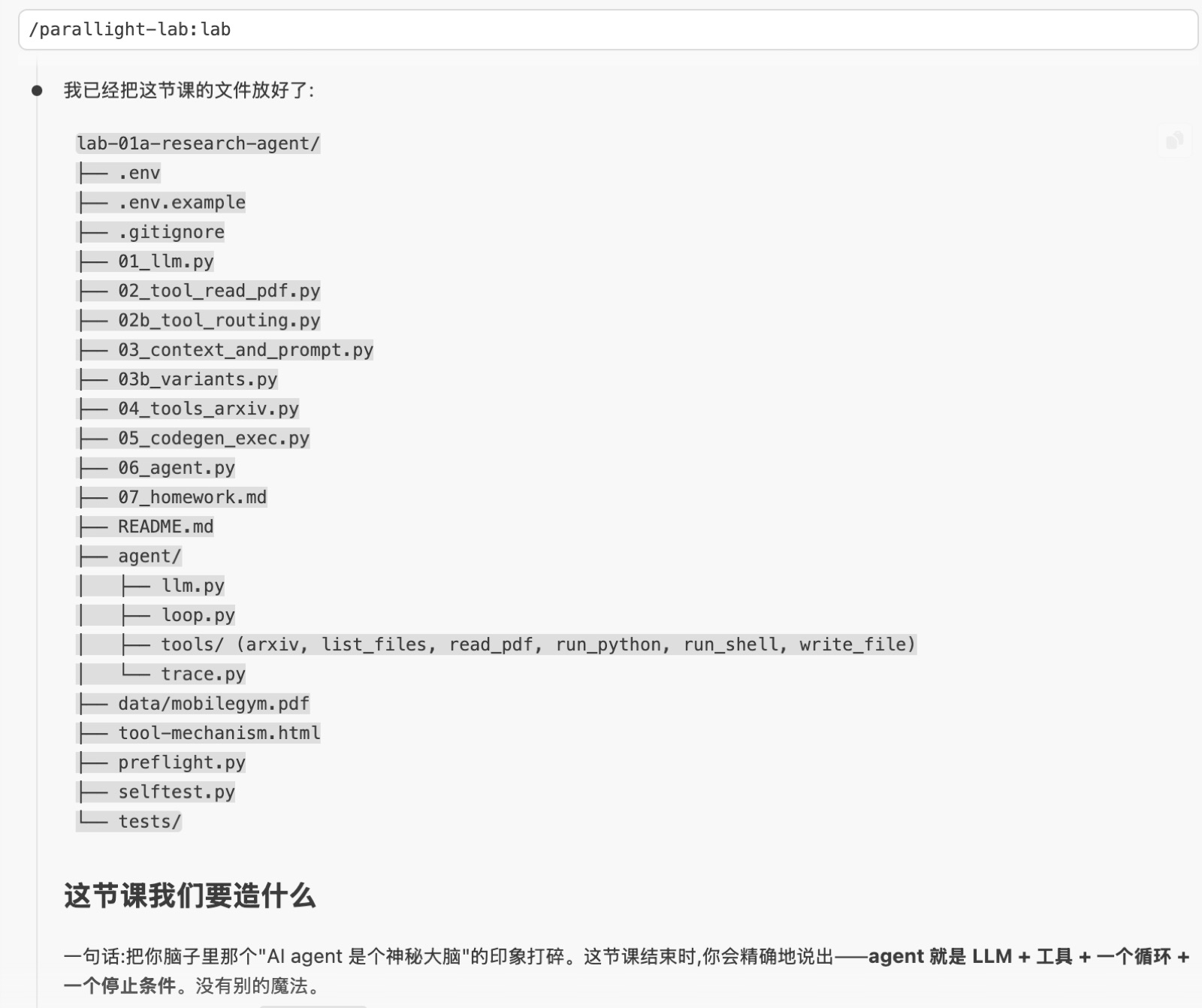
- Cloud sandboxes / GPU / ROS environment, unified model token access and the cloud Claude Code IDE, throughout
- A weekly 1-1 with Marvin; the Mentor and TAs alongside you the whole way
- 6 projects: 3 personal productivity agents + 3 résumé-grade enterprise systems
Already spoken with us? Sign the agreement and pay →
Refund, no questions asked, within 15 days of the start date (through 2026-08-30).
AGENTIST — published by PARALLIGHT · Apply · About · Contact